
Pigeons and other birds often settle on apartment balconies, window ledges, rooftops, air-conditioning units, and building signs. Although birds form a natural part of the urban environment, their regular presence can create problems for property owners. Droppings stain walls and floors, feathers collect in corners, and repeated cleaning takes time and effort.
If birds frequently visit your property, you may have considered bird spikes or bird netting. Both options help discourage birds from settling in unwanted areas, but each works differently. The right choice depends on where birds gather, how they enter the space, and the type of protection your building needs.
In this guide, we compare bird spikes vs bird netting to help homeowners, apartment associations, and commercial property owners make an informed decision.
1. What Are Bird Spikes?
Bird spikes consist of narrow rods or blunt projections fixed to a base. Installers attach them to suitable surfaces where birds commonly land, such as ledges, parapets, roof edges, and signboards.
These spikes make a surface less comfortable for birds to perch on. They do not need to cover an entire open area to serve their purpose.
Where Do Bird Spikes Work Best?
Bird spikes for pigeons can suit locations where birds repeatedly land on narrow or exposed surfaces. Common examples include:
- Window ledges and exterior sills
- Building parapets and roof edges
- Signboards and selected outdoor fixtures
- Narrow ledges above entrances
- Suitable air-conditioning ledges
Installers should select an appropriate product and fixing method for each surface. Proper placement matters because birds may simply move to an unprotected section if the spikes cover only part of their preferred landing area.
2. What Is Bird Netting?
Bird netting uses a mesh barrier to restrict birds from entering a specific space. Installers secure the net around suitable fixing points to cover openings and exposed areas.
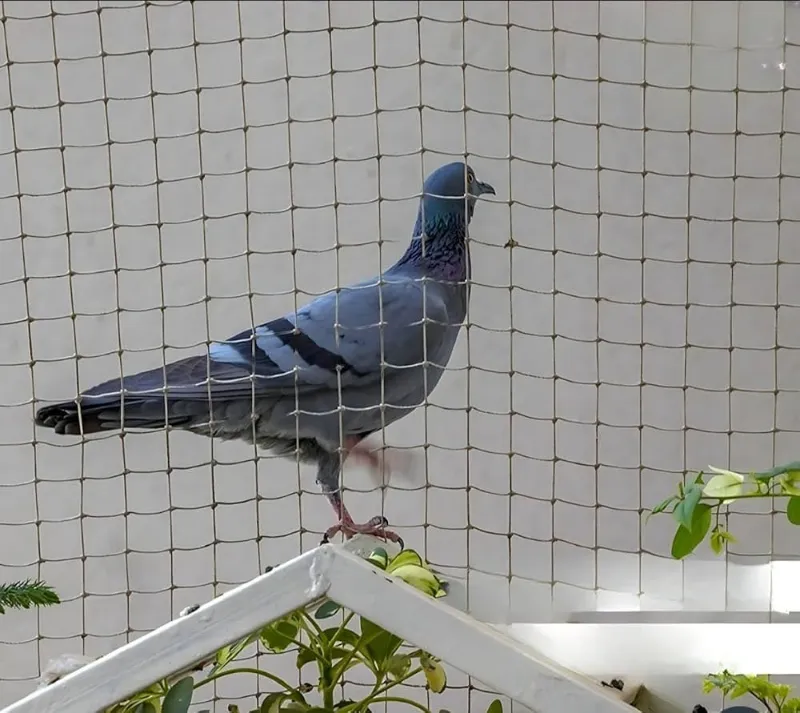
Unlike spikes, which discourage birds from landing on particular surfaces, netting creates a physical barrier across the protected area. This makes it useful for balconies, ducts, utility spaces, and other openings where pigeons may enter and settle.
Where Does Bird Netting Work Best?
Bird netting for pigeons can help protect areas where birds need to be kept out rather than simply discouraged from landing.
Common applications include:
- Apartment balconies
- Open utility areas
- Building ducts and service openings
- Large windows and open sections
- Selected rooftop or commercial spaces
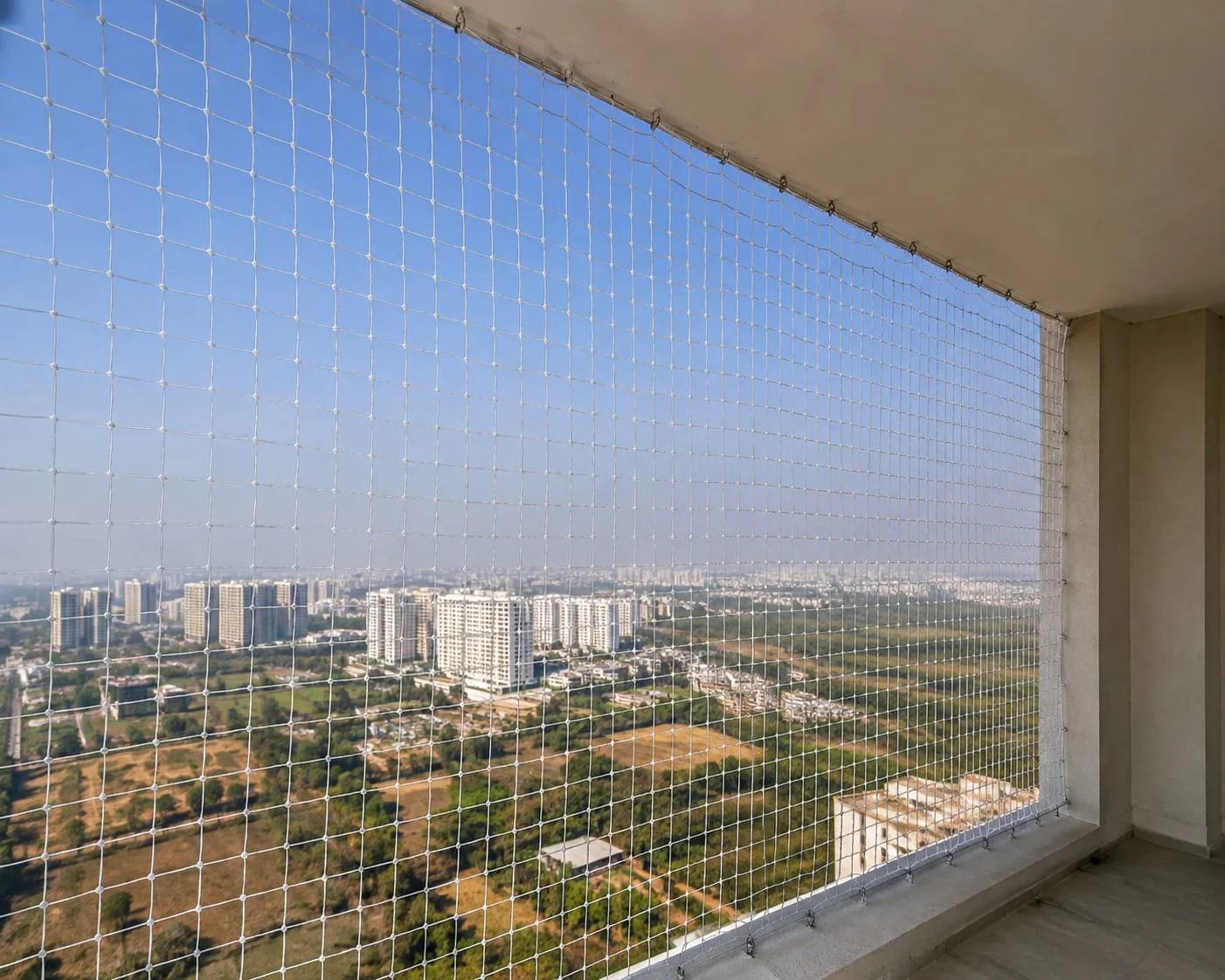
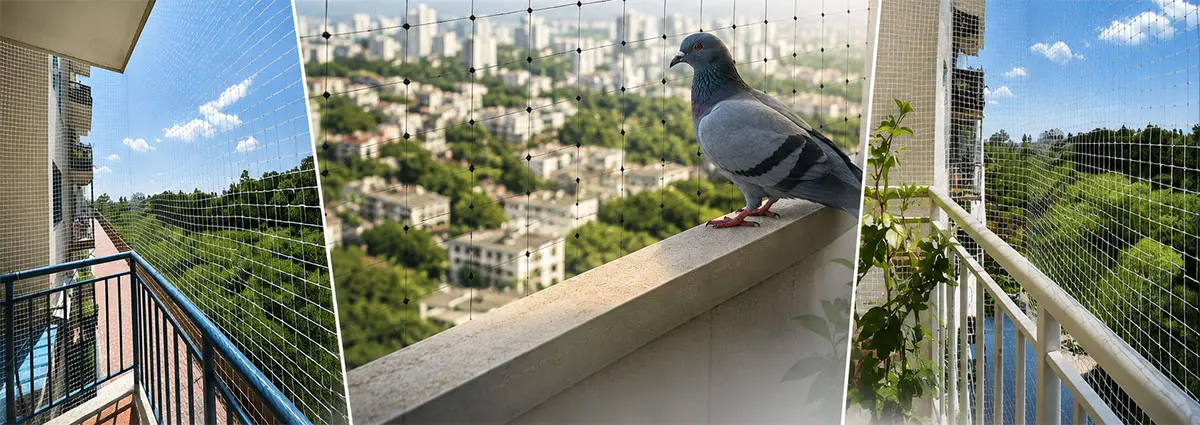
For apartments, pigeon netting for balcony areas can help reduce bird entry while allowing natural light and airflow through a suitable mesh. The installer should measure the opening carefully and secure the net around its edges to reduce gaps.
3. Bird Spikes vs Bird Netting: Key Differences
Both options offer useful bird protection, but their applications differ.
Bird spikes work best on selected landing surfaces. They can suit exposed ledges where pigeons perch repeatedly, and installers can often fit them without covering a large opening.
Bird netting works best when birds enter an open space. It covers the access area and helps prevent pigeons from reaching balconies or other protected sections.
Consider the following factors before choosing:
- Coverage: Spikes protect the surfaces where installers place them. Netting covers a defined opening or area.
- Application: Spikes suit ledges and narrow surfaces. Netting suits balconies, ducts, and open sections.
- Appearance: Both products remain visible to some extent. Fine netting may blend into the background, while spikes stand out more on exposed ledges.
- Installation: Spikes require suitable surface fixing. Netting needs accurate measurements, secure anchor points, and proper tension.
- Maintenance: Both require occasional inspection and cleaning. Leaves, debris, loose fittings, or damaged sections can affect performance.
Neither option suits every building. A site inspection can help identify the most practical solution.
4. Which Option Is Better for Apartment Balconies?
For an open apartment balcony, bird netting often provides a more suitable solution because pigeons can fly directly into the space. Spikes placed on the railing may discourage landing on that particular edge, but they may not stop birds from entering through the open front.
Anti bird netting can cover the balcony opening and help restrict bird access. Homeowners should choose a mesh that suits the building layout and their bird-control requirements.
Before installation, consider the balcony's height, width, railing design, and available fixing points. Also check apartment association rules and any building restrictions that may affect the installation.
If pigeons mainly sit on a narrow ledge outside the balcony, bird spikes may offer a practical alternative. In some buildings, a combination of spikes and netting may address different problem areas more effectively than either option alone.
5. Which Solution Works Better for Commercial Buildings?
Commercial properties often have several areas where birds gather. Pigeons may perch on signboards, roof edges, window ledges, warehouse beams, or exterior structures.
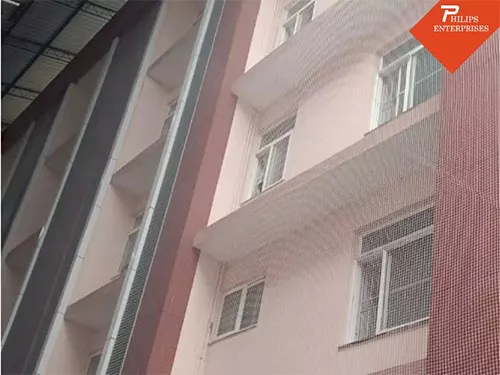
Bird spikes can suit exposed ledges and selected architectural features. Bird netting can help protect larger openings, loading areas, ducts, and covered sections where birds enter and roost.
Property managers should assess each problem area rather than install the same product everywhere. The right combination can reduce unwanted bird activity while keeping access points, ventilation, and routine maintenance requirements in mind.
6. What Affects the Cost of Bird Protection Solutions?
The total cost depends on the property and the installation requirements. Neither bird spikes nor bird netting has one fixed price for every project.
Important factors include:
- Area size: Larger spaces generally require more material and installation time.
- Product type: Material quality, design, and specifications affect the price.
- Access and height: Difficult-to-reach areas may require additional equipment and safety arrangements.
- Fixing requirements: Concrete, metal, glass-adjacent structures, and other surfaces may need different fixing methods.
- Installation complexity: Corners, irregular openings, and multiple exposed sections can increase the work involved.
Request a site assessment and a clear quotation before making your decision. Compare the material specifications, coverage, installation method, and maintenance guidance rather than choosing on price alone.
7. Why Choose Professional Bird Netting Services in Hyderabad?
Correct installation plays an important role in bird control. Loose netting, uncovered edges, and poorly positioned spikes may leave birds with alternative places to land or enter.
Professional installers can inspect your property, identify common bird entry points, take accurate measurements, and recommend suitable products. They can also explain the fixing method and maintenance requirements before beginning the work.
Philips Safety Nets offers safety netting solutions for residential and other property requirements. If pigeons regularly enter your balcony or gather around your building, contact the team to discuss suitable options.
For homeowners searching for bird netting services in Hyderabad, a site-specific assessment can help determine whether netting, spikes, or a combination of both will best suit the property.
8. How to Maintain Bird Spikes and Bird Netting
Regular inspection helps keep bird-control systems in suitable condition. Check for loose fittings, damaged mesh, gaps around the edges, and accumulated leaves or debris.
Clean affected surfaces carefully and follow the installer's maintenance instructions. Avoid pulling, cutting, or altering netting without checking how the changes may affect its fit.
For spikes, inspect the base and fixing points to ensure they remain secure. If birds continue gathering nearby, review the coverage and identify any unprotected surfaces or openings.
Conclusion
Choosing between bird spikes and bird netting depends on where pigeons gather and how they access your property. Spikes can discourage birds from landing on ledges and other narrow surfaces, while netting can restrict entry into balconies, ducts, and open areas.
Before selecting a product, consider the location, required coverage, installation conditions, and long-term maintenance. The right bird protection solutions can help reduce repeated cleaning and make residential or commercial spaces easier to manage.
Contact Philips Safety Nets to discuss your requirements and explore suitable bird-control options in Hyderabad.
Business: Philips Safety Nets
Phone: 08885611728
Address: Baga, H. NO: 2-2-1055/2, Pochamma Basthi, Amberpet, Hyderabad, Telangana 500013