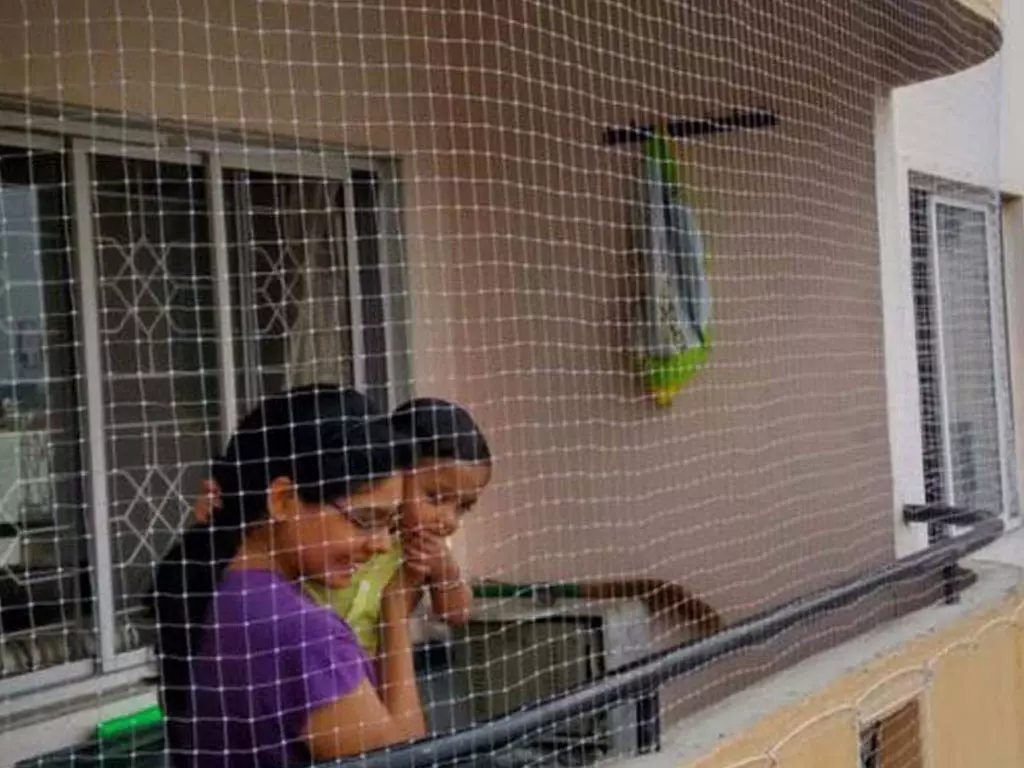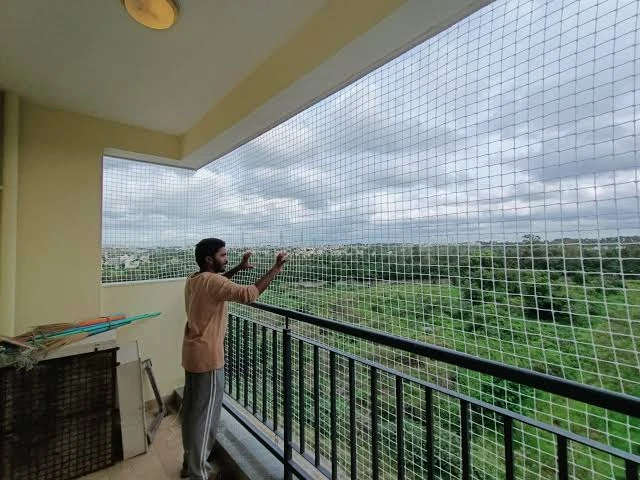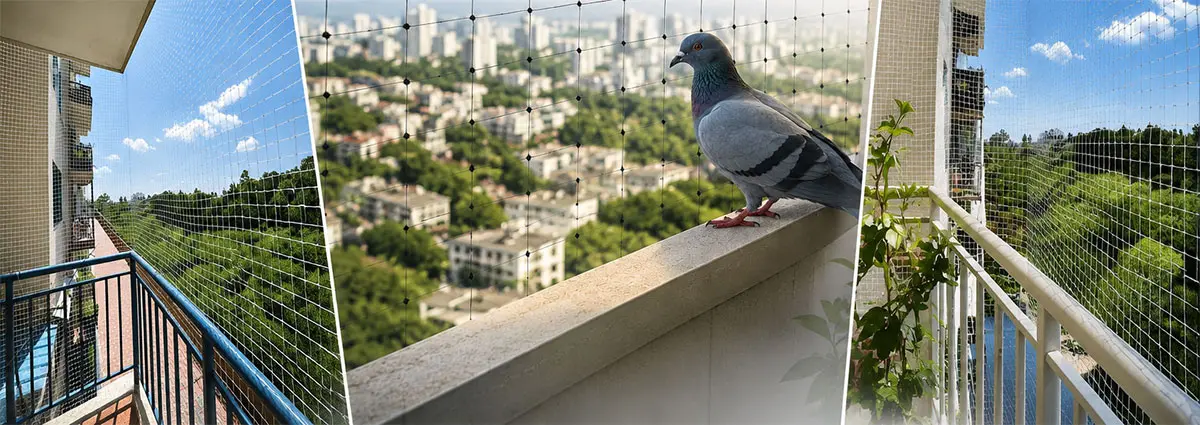
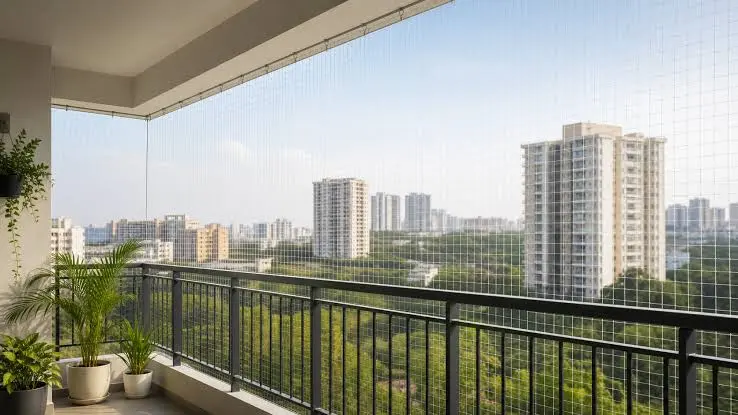
Every balcony safety net looks roughly the same in a photo — a grid of black or white mesh, pulled taut across an open railing. But two nets that look identical can perform very differently once they've been through a Hyderabad summer and a monsoon. The difference usually comes down to four things: mesh size, rope thickness, anchoring method, and UV rating. Get those right and a net will hold for years. Get them wrong, and you'll be calling for a replacement well before you should.
This guide walks through exactly what to check — and what to ask your installer — before you commit to a quote.
1. Getting The Mesh Size Right
Mesh size is measured as the width of each square gap in the net, and it's the first spec worth locking down because it depends entirely on what — or who — you're protecting.
- 2-inch (50mm) mesh — the standard for general fall protection and keeping pigeons out. Suitable for most households without small pets or infants.
- 1.5-inch (38mm) mesh — tighter spacing recommended for homes with cats, small dogs, or toddlers, since it stops a paw, hand or dropped object from slipping through.
- 1-inch mesh — used less often, mainly for aviaries or where very small birds need to be kept out entirely.
A wider mesh isn't a defect — it's simply designed for a different job. The mistake is not asking your installer which size they're quoting, since a visually similar net could be either.
2. Why Rope Thickness Matters More Than Colour
Most customers judge a net by its colour or how "invisible" it looks from the street. Rope thickness — measured in millimetres — is the spec that actually determines strength, and it's rarely mentioned unless you ask.
| Rope Thickness | Typical Use | Load-Bearing |
|---|---|---|
| 1.5mm - 2mm | Light bird/pigeon netting only | Low |
| 2.5mm - 3mm | Standard balcony safety nets | Medium-High |
| 3.5mm+ | Construction & heavy-duty fall protection | High |
For a residential balcony, 2.5mm to 3mm high-tensile nylon is the sweet spot — strong enough for genuine fall protection, without the excess bulk that makes a net look heavy or industrial.
3. Anchoring: The Part That Actually Keeps You Safe
A premium net with poor anchoring is still a poor installation. The net material gets most of the attention, but the anchor points — where hooks, eye-bolts or brackets attach to your wall, floor or grille — are what carry the actual load if someone leans or falls against the net.
Ask your installer three questions here:
- What anchor spacing will be used (typically every 12-18 inches for a secure fit)?
- Are the fixings rated for the surface — brick, concrete, or metal grille each need a different approach?
- Will the net be tension-tested on site before handover?
If an installer can't answer these clearly, that's a signal to ask more, not less.
Not sure what your balcony needs?
Our team will inspect your space and recommend the right mesh, rope and anchoring — free, no obligation.
4. UV Rating And Hyderabad's Climate
Hyderabad's sun is relentless for roughly eight months of the year, and untreated nylon degrades under constant UV exposure — it turns brittle, loses colour, and eventually weakens at the fibre level long before it looks obviously damaged.
A UV-stabilised net is treated during manufacturing to resist this breakdown. It's a small difference in the product spec sheet, but it's the single biggest factor in whether a net lasts 2 years or 6+.
There's no easy way to visually confirm UV stabilisation from a sample swatch, so this comes down to asking your installer directly and, where possible, checking the manufacturer's rating on the product they're quoting.
5. Red Flags To Watch For In A Quote
A handful of warning signs tend to separate a rushed job from a proper one:
- No site visit before quoting. Balcony shapes vary — a phone-only quote is a guess, not a measurement.
- No mention of mesh size or rope thickness. If the quote just says "safety net," ask for specifics in writing.
- Unusually low pricing with no material details. Cheaper nets are often thinner gauge or non-UV-treated — fine for some uses, but not disclosed upfront is a problem.
- No tension-testing or final inspection mentioned. A completed installation should be checked on site, not just fitted and left.
Frequently Asked Questions
What mesh size is best for a balcony safety net?
For general fall protection and pigeon control, a 2-inch (50mm) square mesh is the standard choice. Homes with small pets, cats or infants often go tighter, at 1.5 inches, since a smaller gap stops a curious paw or a dropped toy from passing through.
How long do balcony safety nets last in Hyderabad's climate?
A UV-stabilised, high-tensile nylon net properly anchored typically lasts 5 to 7 years in Hyderabad's sun and monsoon before it needs replacing, though an annual inspection is recommended to catch fraying or anchor loosening early.
Can a balcony safety net be installed without drilling into the wall?
In most cases some drilling is required for secure anchoring, since adhesive-only fixings aren't rated for fall protection. For rented apartments, installers can often use existing grille points or minimal, easily-patched anchor holes.